The Dating Double Standard I Didn’t Know I Had
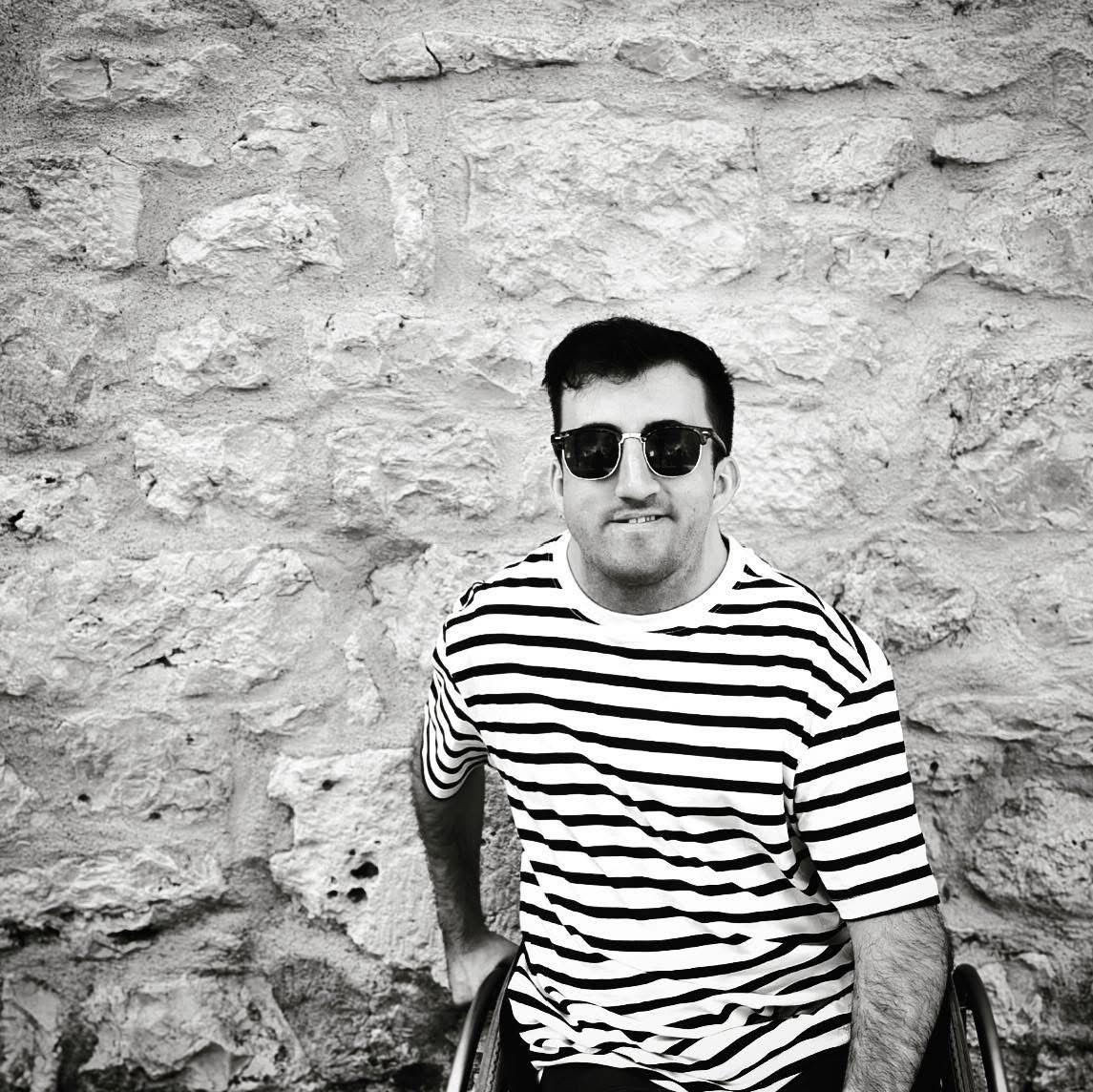
Hello everyone! For those who don’t know me, I’m Myles, and I am, for want of a better description, the male, disabled equivalent of Bridget Jones. My dating life contains fewer Hugh Grants, but just as much romantic confusion.
For the past 12 years, I’ve documented much of this through my blog, The Adventures of a Guy Called Mylo. It started as a place to share stories from university days, but these days I seem to spend an alarming amount of time writing about one’s never-ending quest to find Mrs Right.
Disability inevitably comes into it too. I was born with Arthrogryposis, a condition which affects my joints, meaning I use a wheelchair. It has shaped plenty of my life’s experiences, but I’ve always tried to make it part of the story rather than the entire plot. That seems to resonate, because most of the people who read my blog aren’t disabled. Beneath the disability, much of what I write about is really just the very ordinary business of attempting to find someone.
So when Dateability recently got in touch and asked if I fancied writing something for them, it felt like the perfect match! Dateability, for anyone unfamiliar, is a dating app created specifically for disabled and chronically ill people. It’s designed to remove some of the stigma that comes with dating when disabled.
Jacqueline from Dateability and I started throwing around ideas for what I could write about. We contemplated different topics and settled on something they see quite regularly: disabled people saying they would never date another disabled person. She suggested I might explore lateral ableism within our own community.
I read her message and immediately felt uncomfortable. You see, back in February 2025, I had written an entire blog answering the question of whether I would date another physically disabled person… To cut a long story short, my answer was no.
Naturally, I sent it to her. Jacqueline read it and came back asking whether she’d just completely called me out. She absolutely had, and even more annoyingly, she’d made me wonder whether 2025 Mylo might have some explaining to do.
In defence of 2025 Mylo…
The piece came about because I’d been asked the question plenty of times over the years. Every single person I’ve ever been with or dated has been able-bodied. In turn, that’s led to questions as to whether I’d date someone disabled.
I’ve always found the question slightly odd. Being disabled doesn’t automatically mean I’m going to fancy somebody else because she also happens to be disabled. You wouldn’t introduce two people by saying, “You’ll love her, mate. She’s also wearing glasses.” Yet when two people use wheelchairs, apparently Cupid should immediately start warming his bow.
Still, I wrote about it and admitted that I probably wouldn’t date another person with a disability. Part of that was simply because I’d never found myself attracted to many disabled women… There’s also a practical element.
Although I use a wheelchair, my particular disability gives me a fair bit of flexibility. I can walk a little and get in and out of my chair. It means that when accessibility inevitably goes wrong, I can find another way. For example, if there’s a step in the way, I might be able to stand up and drag it up myself.
That flexibility mattered to me. I liked the idea of being with someone whose physical abilities complimented my own. If I struggled with something, they might be able to do it more easily, and vice versa. In my head, that simply made navigating an inaccessible world together a little easier.
Even now, I don’t think there’s anything inherently wrong with that. Where I think I went wrong was taking “I want somebody whose abilities compliment mine” and allowing it to become “I probably wouldn’t date another disabled person.”
They’re not actually the same thing, are they? Then came the awkward realisation. I’ve spent a long time asking folk not to make assumptions about me because I use a wheelchair.
Don’t assume I’m dependent. Don’t assume dating me means becoming my carer. Don’t assume I can’t travel or be spontaneous. Don’t assume my life revolves entirely around my disability. Definitely don’t assume what I can and can’t do in the bedroom because a gentleman never tells.
My argument has always essentially been: get to know me first.
Find out what I’m like. Find out what I want from life and what being in a relationship with me would actually involve. Then, by all means, swipe left. Plenty have, and that’s just part of it.
The uncomfortable part was realising I hadn’t always extended the same courtesy to disabled women. Without really noticing, I’d taken my own experience of disability and assumed dating someone else disabled might simply double my efforts.
The more I thought about it, the less sense that made.
Disabled isn’t a personality type
One of the things Jacqueline mentioned to me was that we can sometimes see disability through the lens of our own condition. I know what being disabled means for me, but that doesn’t mean I have the faintest idea what it means for somebody else.
Disability is HUGE! Somebody might be deaf, visually impaired, have cerebral palsy, live with a chronic illness or have a condition that isn’t immediately obvious. Another woman might use a wheelchair but have completely different physical abilities from me.
Even two people with the same diagnosis can have completely different experiences.
So saying, “I probably wouldn’t date a disabled woman” suddenly becomes an incredibly broad statement. Which disabled woman? What disability? What can she do? What does she enjoy? Is she adventurous? Does she want children? Does she make me laugh? Can she reach things on the top shelf, because at 4ft 10 I do have to think practically sometimes? …
… Do we fancy each other?
Maybe we’re not immune from ableism either
Ableism is very easy to spot when somebody else is doing it to you. It’s much harder when you realise you may actually be ableist too.
Disabled people grow up in the same world as everyone else, meaning we absorb the same ideas about what attractiveness supposedly looks like. Sadly, disabled bodies aren’t front and centre of that conversation. We’re allowed to be inspirational and brave, but being someone another person simply wants to rip the clothes off has traditionally been a bigger stretch.
I don’t think my old dating preferences were entirely the result of internalised ableism. Attraction is personal, and some of my practical considerations were completely genuine. Still, I made assumptions about people I hadn’t met based entirely on the fact they shared an extremely broad label with me.
It’s something I hadn’t really considered until Dateability accidentally held up the mirror.
Nobody owes anybody attraction
There is an important caveat to all this, because I don’t want dating to become some enormous moral exercise where we’re required to justify every left swipe. Put simply, nobody owes anybody attraction.
I also still don’t believe disabled people should automatically date other disabled people. I’ve had people suggest women to me seemingly because we both happen to have disabilities. I’ve never understood why that should make us compatible.
I want someone who makes me laugh and enjoys disappearing somewhere for a weekend. Ideally, she also needs to tolerate my dog, Eric, who’s a menace to society but also very affectionate.
Those things matter considerably more to me than whether somebody walks or wheels through the door. That’s the distinction I hadn’t made before. There’s nothing wrong with meeting a disabled woman and not fancying her, just as there isn’t anything wrong with recognising that two people’s particular needs might make a relationship difficult.
It’s deciding all of that before you’ve even met her.
So, would I date another disabled person now?
Yes, I would… maybe… I should probably clarify that this isn’t some dramatic awakening. I’m not suddenly asking Dateability to deliver every available disabled woman to my front door.
Most of what I want from a relationship hasn’t changed. I still value independence and spontaneity, and I want somebody whose strengths complement my own. I want a relationship where we can help each other without either person taking over.
What has changed is my assumption that another disabled person couldn’t offer me that. I’ve spent years wanting women to look beyond my wheelchair before deciding what dating me might be like. It tells them very little about the person sitting in it. It doesn’t tell them what I want from life or whether we’d still be talking three hours after ordering dinner.
So, yes, Jacqueline completely called me out without even knowing she was doing it. She made me revisit an opinion I’d confidently posted online, then question whether I’d been guilty of the same assumptions I’d spent years avoiding.
Perhaps that’s the biggest thing I’ve taken from all of this. Sometimes it’s easy to spot prejudice when you’re on the receiving end. It’s much harder to recognise your own preconceptions and admit that they might need challenging too. When I asked myself who needed challenging this time, the answer was pretty obvious:
It was you, Myles.